
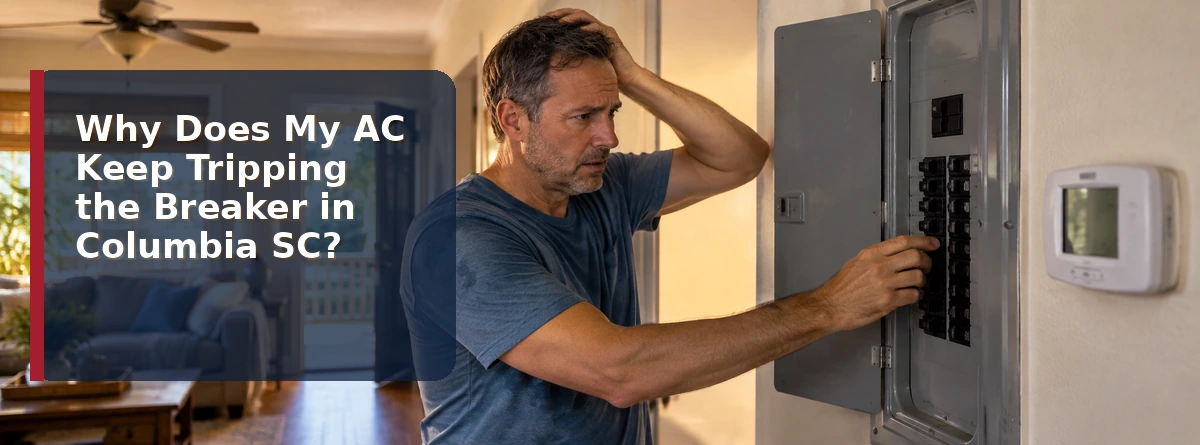
Why Does My AC Keep Tripping the Breaker in Columbia SC?
Date: 10-15-2026
A breaker that keeps tripping is protecting the circuit
If your air conditioner keeps tripping the breaker, the breaker is reacting to an electrical condition it is designed to interrupt. A one-time trip can happen, but repeated trips should not be treated as something to reset over and over. In Columbia and the South Carolina Midlands, long cooling cycles during hot weather can expose weak electrical parts or other HVAC problems that were not obvious during milder conditions.
The safest approach is to pay attention to when the trip occurs, make a few simple homeowner checks, and stop running the system if the breaker trips again.
Common Causes of a Tripping AC Breaker
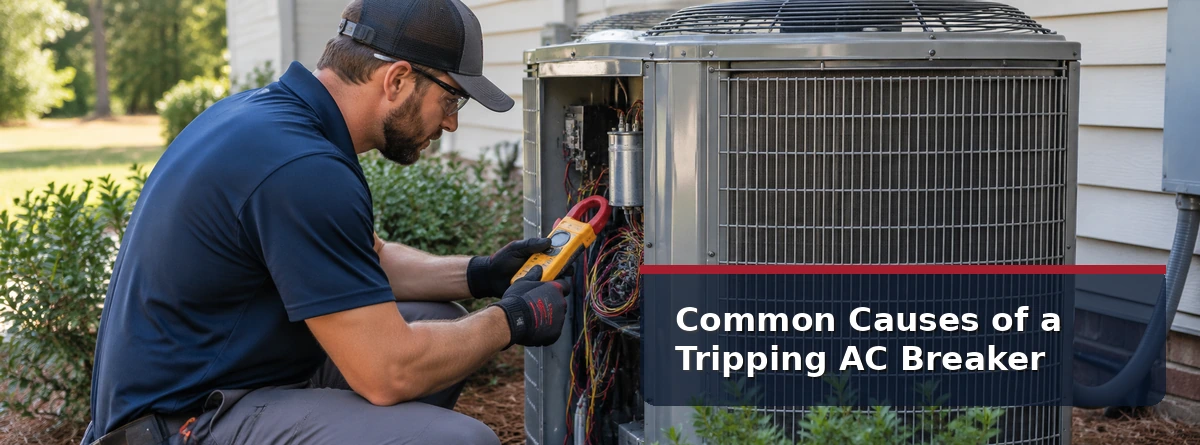
Several different problems can make an air conditioner draw more electrical current than the circuit should carry. A dirty air filter can restrict airflow and add strain to the system. A dirty outdoor coil can make it harder for the unit to release heat, especially during long South Carolina cooling cycles.
Electrical parts can also be involved. A weak capacitor may make a compressor or fan motor struggle to start, while a failing motor or compressor can draw excessive current. Loose or damaged wiring, overheated connections, or a breaker that is no longer operating correctly can also cause repeated trips. These are not problems a homeowner should diagnose by opening panels or testing live electrical components.
What Homeowners Can Safely Check First
Start with the simple things that do not require opening electrical equipment. Check the thermostat settings, inspect the air filter, and make sure the outdoor unit is not blocked by leaves, grass, or debris. If the filter is dirty, replace it with the correct size and type for the system.
If the AC breaker is clearly labeled and there is no smoke, burning odor, visible damage, or other electrical warning sign, resetting it once may be reasonable. If it trips again, leave it off. Repeatedly resetting the breaker can keep sending power back to a system that is trying to shut itself down for a reason.
Also notice when the trip happens. Does it occur as soon as cooling starts, after the system has been running for several minutes, or only during the hottest part of the day? Details like weak airflow, ice, unusual buzzing, or a change in how the outdoor unit sounds can help a technician narrow down the problem. Mid-State provides HVAC inspections and repairs and residential HVAC services for cooling problems in Columbia, Lexington, and surrounding Midlands communities.
When to Shut It Off and Call for Service
Turn the air conditioner off and schedule service if the breaker trips again after one reset. Stop immediately if you notice a burning smell, smoke, sparking, unusual heat at the electrical panel, or strong electrical buzzing. Those symptoms should not be handled as a do-it-yourself HVAC repair.
A qualified HVAC technician can test the equipment safely and determine whether the problem is related to airflow, a capacitor, a motor, compressor operation, wiring, or another part of the cooling system. If testing points to a problem with the home’s electrical panel or breaker rather than the HVAC equipment, a licensed electrician may also be needed.
Preventive maintenance can help identify some developing electrical and airflow problems before they lead to a shutdown. Mid-State's HVAC service agreements include checks of electrical connections, terminals, compressor operation, filters, thermostat operation, and safety controls.
Repeated Breaker Trips Deserve a Real Diagnosis
A breaker trip is a warning, not a repair. If your AC keeps tripping the breaker, the goal is to find out what is making the circuit shut down instead of repeatedly restoring power and hoping the problem goes away.
Mid-State Heating and Air, LLC can diagnose repeated AC breaker trips and explain what the system needs. For urgent cooling or electrical warning signs, Mid-State also provides 24/7 emergency HVAC repair. You can also schedule an HVAC appointment for service in Columbia, Lexington, and nearby South Carolina Midlands communities.