

Why Your AC Can Freeze Up in Columbia Summer
Date: 07-15-2026
Why Your AC Can Freeze Up in Columbia Summer
Quick Answer: An air conditioner can freeze during hot weather when the indoor coil becomes too cold because of restricted airflow, low refrigerant, a blower problem, or another system fault. The ice is a symptom, not the actual problem, and continuing to run the unit can lead to water damage or more expensive repairs.
Seeing ice on an air conditioner during a 90-degree Columbia afternoon feels backward, but it is a common cooling problem. The system needs constant airflow and the correct refrigerant conditions to absorb heat properly. If either step in that process is disrupted, the evaporator coil can drop below freezing even when the outdoor temperature is high. Mid-State Heating and Air, LLC provides residential HVAC services for homes in Columbia, Lexington, and nearby communities dealing with frozen coils, poor airflow, and loss of cooling.
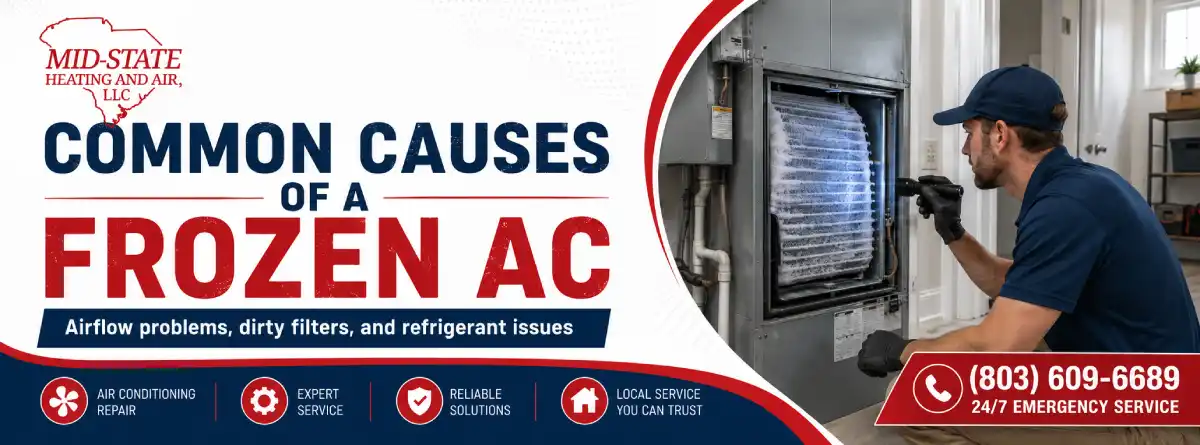
How Ice Forms on an Air Conditioner
The indoor evaporator coil is supposed to be cold, but not frozen. Warm household air moves across the coil, and the refrigerant inside absorbs that heat. If too little warm air reaches the coil or the refrigerant pressure is incorrect, moisture on the coil can freeze. As ice builds, airflow drops further, allowing the freezing problem to spread.
Restricted Airflow Is a Common Cause
A dirty filter is one of the first things to check. Closed or blocked supply vents, a dirty evaporator coil, damaged ductwork, or a weak blower motor can also reduce airflow. A filter that looks only partly dirty may still create trouble during long summer run cycles. Regular filter checks and seasonal HVAC maintenance can help identify airflow problems before the system freezes.
Low Refrigerant or Mechanical Problems
Low refrigerant can lower coil temperature and cause ice to form, but refrigerant does not normally get used up like fuel. A low charge frequently indicates a leak that requires professional diagnosis. A failing blower, a dirty coil, a faulty control, a restricted metering device, or a thermostat issue may cause similar symptoms. Refrigerant and electrical testing should be handled by a trained technician rather than treated as a homeowner's repair.
Why This Matters
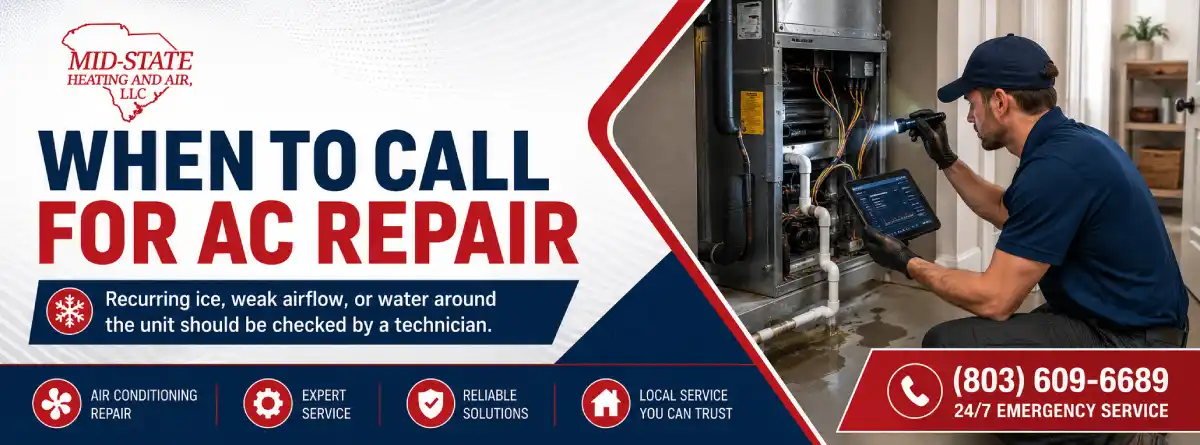
A frozen AC system cannot cool the home effectively. It may run for long periods while indoor temperatures keep climbing, and melting ice can overflow the drain pan or leave water around the air handler. Continued operation may also place extra strain on the compressor and blower. Finding the cause early can reduce the chance of additional damage and restore cooling more quickly.
Common Mistakes
- Continuing to run the air conditioner while ice is visible.
- Chipping ice from the coil with a tool or sharp object.
- Assuming low refrigerant is the only possible cause.
- Installing a new filter without checking whether the airflow improves.
Best Practices
- Turn the cooling mode off and allow the ice to thaw fully.
- Check the filter and make sure return grilles and supply vents are not blocked.
- Use the thermostat fan setting only if there is no burning smell, smoke, or electrical concern.
- Arrange professional service if the unit freezes again or cooling does not return.
Local Relevance
Columbia and Lexington summers combine high temperatures with heavy humidity, so air conditioners often run for extended periods. Pollen, pet hair, dust, older ductwork, and clogged filters can become more noticeable during those long cycles. Summer storms and power outages can also affect control systems or restart behavior. A system that performs normally in mild weather may reveal an airflow or refrigerant problem once the cooling load increases.
When to Contact a Professional
Call for service if ice returns after thawing, the blower is not moving air, the filter becomes wet, water is collecting around the unit, or the home will not cool. Burning odors, smoke, buzzing electrical sounds, or loss of cooling during dangerous heat should be handled immediately via emergency HVAC repair in Columbia, SC. Do not open sealed electrical panels or attempt to add refrigerant.
Final Thoughts
An air conditioner freezing in summer usually means that airflow, refrigerant, or a mechanical component needs attention. Thawing the ice may restore temporary operation, but it does not correct the cause. Mid-State Heating and Air, LLC can inspect the system, explain the findings, and recommend an appropriate repair. Homeowners can request an appointment for AC service in Columbia, Lexington, and surrounding Midlands communities.
Frequently Asked Questions
Can a dirty air filter cause my AC to freeze?
Yes. A clogged filter restricts the flow of warm air across the evaporator coil, allowing the coil temperature to drop and moisture to freeze. Replace the filter with the correct size and arrange service if the ice returns.
Should I turn off my AC if it is frozen?
Turn the cooling mode off and allow the ice to thaw. The thermostat fan may be set to On to move air across the coil only when there is no burning smell, smoke, or electrical concern. Do not chip or scrape the ice.
How long does a frozen air conditioner take to thaw?
Thawing often takes several hours, depending on the amount of ice, indoor temperature, and available airflow. Leave the cooling mode off until the ice is completely gone. Recurring ice requires professional diagnosis.
Does a frozen AC always mean the refrigerant is low?
No. Low refrigerant quantities are one possible cause, but dirty filters, blocked airflow, dirty coils, blower problems, control faults, and restricted metering devices can also produce similar symptoms.
Is a frozen air conditioner an emergency?
It may become urgent if cooling is lost during dangerous heat or the system produces smoke, a burning odor, electrical sounds, or significant water leakage. Otherwise, turn off the cooling mode and schedule prompt professional service.