
Should I Use a Protective Cover on My AC Unit for Snow?
Date: 02-15-2026
Should I Use a Protective Cover on My AC Unit for Snow?
If you live somewhere that sees snow even occasionally, this question probably pops into your head every winter. You walk outside, look at your AC unit sitting there in the cold, and think, this thing can’t possibly like being buried in snow. Honestly, it feels wrong to just leave it exposed. I hear this concern all the time, and I get it. But the answer is not as straightforward as most people expect.
The short version is this. Sometimes a protective cover on your AC unit makes sense, and sometimes it can actually cause more harm than good. The details matter, and skipping them is where people get into trouble.
Why people want to cover their AC unit in winter
Most homeowners are trying to do the right thing. Snow, ice, freezing rain, falling branches, it all looks like a threat. In my experience, the main reason people want to cover their outdoor AC unit is simple peace of mind. It feels like protection, even if they are not totally sure what they are protecting it from.
There are a few common concerns that keep coming up.
- Snow is piling up inside the unit and freezing
- Ice forming on coils or fan blades
- Debris falling into the unit during storms
- Worry about long-term rust or corrosion
All of those concerns are understandable. The thing is, modern AC units are already designed to live outdoors year-round. Rain, heat, wind, and yes, snow are all part of the deal.
What actually happens to an AC unit in the snow
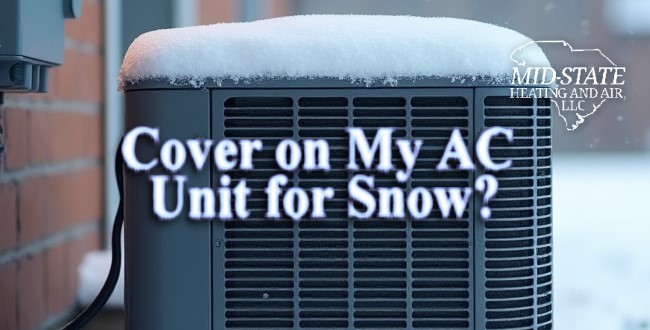
Here’s where it gets a little counterintuitive. Snow by itself is not usually the enemy. Light to moderate snowfall on an AC unit is rarely a problem. The metal cabinet, the coils, and the fan are built to handle moisture and freezing temperatures.
In fact, snow can sometimes act as insulation. It melts slowly and drains away, rather than instantly soaking everything the way cold rain can. You would be surprised how many outdoor AC units sit under snow every winter and fire right back up in the spring without any issues.
The real problems tend to come from moisture getting trapped where it shouldn’t, and that’s where certain AC covers can cause trouble.
Covering your AC unit can cause problems
This is the part that catches people off guard. Fully covering an AC unit with a tight, plastic, or waterproof cover can trap moisture inside. That moisture has nowhere to go. Over time, it can lead to rust, corrosion, and even mold growth inside the unit.
I’ve seen units where the cover did more damage than the snow ever would have. The owner thought they were protecting their equipment, but what they really did was create a damp little environment that just sat there all winter.
Another issue is pests. Covered AC units can attract mice or insects seeking shelter. That’s not something you want chewing on wires or nesting near electrical components.
When a protective cover actually makes sense
Now, I’m not saying you should never cover your AC unit. There are situations where a partial cover is a smart move.
If you have many trees nearby, especially those that shed branches, pine needles, or heavy debris, protecting the top of the unit can help. The keyword here is top, not the entire unit.
- A breathable cover that only protects the top surface
- A piece of plywood was weighed down, not wrapped tightly
- Manufacturer-approved AC unit covers designed for airflow
The goal is to block falling debris while still allowing air circulation and moisture to escape. If air can move, moisture can dry. That’s what keeps internal components healthier over time.
What HVAC manufacturers usually recommend
This part is important, and people often skip it. Most HVAC manufacturers do not recommend fully covering your outdoor AC unit for winter. If you check the owner’s manual, you will usually see language that warns against wrapping the unit completely.
Manufacturers design these systems to withstand outdoor conditions in all kinds of weather. Snow is already part of the equation. What they cannot design around is trapped moisture caused by improper covers.
Actually, scratch that. They can design around it, but they assume homeowners will not do it in the first place.
Simple winter AC protection tips that actually help
If you want to protect your AC unit during winter without causing unintended damage, focus on the basics. These are the things that tend to make a real difference.
- Clear leaves and debris from around the unit in the fall
- Trim nearby branches that could fall during storms
- Keep gutters and downspouts directing water away
- Make sure snow drifts do not bury the unit completely
You do not need to obsess over it. A little awareness goes a long way.
What about heat pumps?
This is worth mentioning because it comes up a lot. If you have a heat pump instead of a traditional AC-only system, do not cover it. Heat pumps run during winter, even in cold weather. Covering one can seriously interfere with its operation.
I’m not 100 percent sure why this myth still hangs around, but it does. Heat pumps need exposure to outdoor air to work properly. Covering them is a bad idea, period.
So, should you cover your AC unit or not?
Here’s the honest answer. For most homes, fully covering the AC unit for snow is unnecessary and can even be harmful. A partial top cover can make sense if debris is a concern, but airflow should never be blocked.
If you are unsure, the safest option is usually to leave the unit uncovered and focus on keeping the area around it clean and clear. That approach works for the vast majority of homeowners and aligns with what HVAC professionals typically recommend.
If you want absolute certainty, checking your manufacturer's guidelines or asking a local HVAC pro is never a bad idea. Conditions vary, and local experience matters.
Winter can be hard on a lot of things around the house, but your AC unit is tougher than it looks. Sometimes doing less is actually doing it right.