
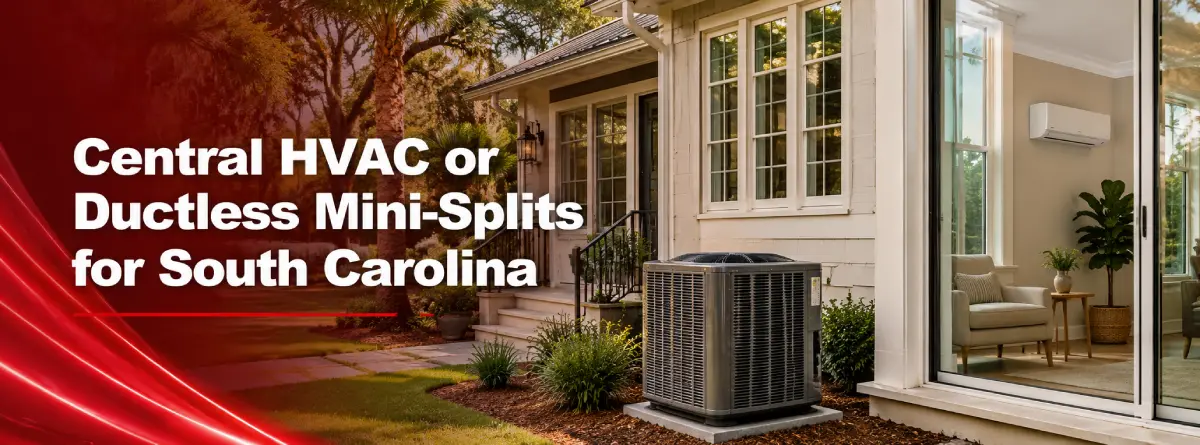
Central HVAC or Ductless Mini-Splits for South Carolina
Date: 07-01-2026
Central HVAC or Ductless Mini-Splits for South Carolina
Quick Answer: Central HVAC is usually a good fit for a whole home with usable ductwork, while ductless mini-splits work well for additions, older homes without ducts, and rooms needing separate temperature control. The better choice depends on the layout, duct condition, number of comfort zones, appearance preferences, and how each space is used.
Homeowners in Columbia and Lexington often compare these systems when replacing aging equipment or cooling a sunroom, garage apartment, upstairs bedroom, or renovated space. A central system and a ductless mini-split system can both provide dependable heating and cooling when properly sized and installed, but they distribute air differently.
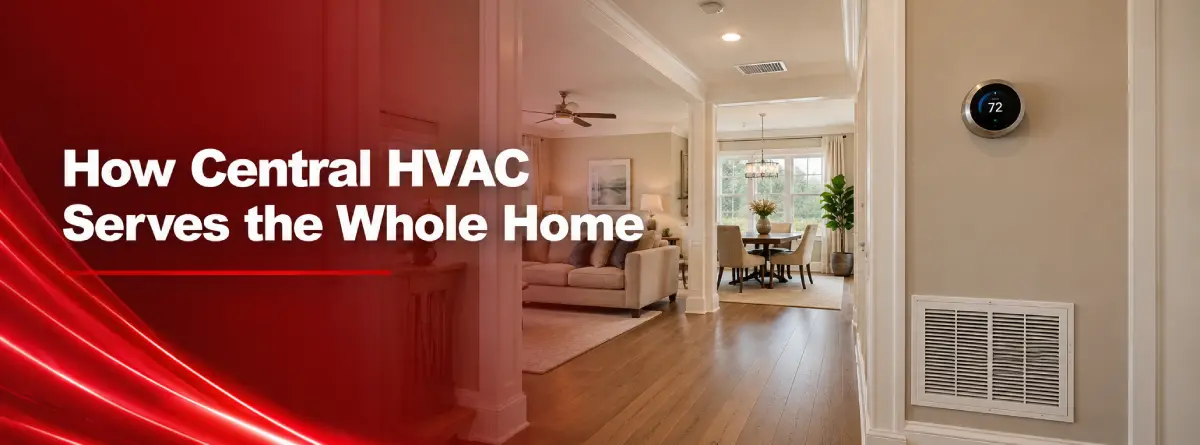
How Central HVAC Serves the Whole Home
Central HVAC uses an indoor air handler or furnace, an outdoor unit, and ducts that carry air to multiple rooms. It keeps most equipment out of sight and allows the home to be controlled from one main thermostat. With well-designed, properly sealed ducts, a central system can provide balanced comfort without placing an indoor unit on each wall.
Duct condition matters. Leaks, crushed flex duct, poor return airflow, undersized runs, or hot attic ductwork can reduce comfort. Before choosing a replacement, homeowners should consider the equipment and air-distribution system together through appropriate HVAC system upgrades.
Where Ductless Mini-Splits Make Sense
Ductless systems connect one outdoor unit to one or more indoor air handlers. Each indoor unit serves a room or zone, allowing occupants to adjust temperatures based on use. This can be practical for additions, workshops, enclosed porches, bonus rooms, older houses without ducts, and rooms that stay warmer or colder than the rest of the home.
Indoor heads remain visible, and every unit needs filter cleaning, condensate drainage, and service access. A multi-zone system also requires planning. Adding heads without evaluating room size, outdoor-unit capacity, line-set routing, and expected use can cause uneven performance.
Comfort, Humidity, and Energy Use
Neither system type is automatically the best option for every property. Performance depends on equipment efficiency, sizing, installation quality, insulation, air leakage, duct losses, and household habits. In South Carolina's humidity, oversized or poorly controlled equipment may cool quickly without managing moisture as well as expected.
Ductless zoning may reduce conditioning in unused areas, but doorways and room layout affect how air moves beyond each indoor unit. Central HVAC usually handles connected rooms more uniformly, though homes with significant temperature differences may require airflow adjustments, duct repairs, insulation work, or professional zoning.

Why This Matters
The right system ought to match the building. A sound central system may be the simplest way to serve an entire home, while ductless equipment may solve a specific comfort problem without extending ductwork. Comparing both options can prevent spending money on equipment that does not address the actual cause of uneven temperatures.
Common Mistakes
- Choosing equipment based only on the lowest installation price.
- Ignoring duct leakage, insulation, return airflow, or room-by-room load differences.
- Assuming one ductless head will evenly condition several closed rooms.
Best Practices
- Have the home and each proposed comfort zone evaluated before selecting capacity.
- Compare installation needs, maintenance access, sound, appearance, and long-term service requirements.
- Use seasonal HVAC maintenance to keep filters, drains, coils, airflow, and controls checked.
Local Relevance
Homes around Columbia, Lexington, Chapin, Irmo, Cayce, and nearby communities may include hot attic ductwork, converted porches, bonus rooms, crawl spaces, and older additions. Those details can change which system is more practical. Summer humidity and afternoon heat gain also make correct sizing and airflow important.
When to Contact a Professional
Professional guidance helps when replacing older equipment, adding conditioned space, correcting uneven temperatures, or deciding whether existing ducts can support a new system. Mid-State Heating and Air, LLC can evaluate the layout, equipment, ducts, electrical needs, drainage, and comfort goals through its residential HVAC services.
Final Thoughts
Central HVAC and ductless mini-splits are both suitable when matched to the right application. The decision should reflect the number of rooms requiring service, whether usable ductwork is available, the desired level of individual control, and all required installation changes. Homeowners can request an appointment with Mid-State Heating and Air, LLC to compare options.
Frequently Asked Questions
Is a ductless mini-split better than central HVAC?
Not automatically. Ductless is often useful for separate zones or spaces without ducts, while central HVAC may be simpler for a whole home with sound ductwork.
Can ductless mini-splits cool an entire house?
They can when the home is properly evaluated, and the system is configured with enough indoor zones. Closed rooms, floor-plan barriers, and capacity limits must be considered.
Are mini-splits good for South Carolina humidity?
A properly sized and controlled mini-split can help control temperature and moisture in its zone. Oversized or poorly installed equipment may cycle too quickly to provide the expected humidity control.
Is central HVAC less expensive than ductless?
It depends. Central replacement may cost less when usable ductwork is already in place, while ductless systems may avoid the cost and disruption of adding new ductwork.
Do central and ductless systems need maintenance?
Yes. Both need filter care, clean coils, clear condensate drainage, outdoor-unit clearance, and professional checks based on equipment condition and manufacturer guidance.